

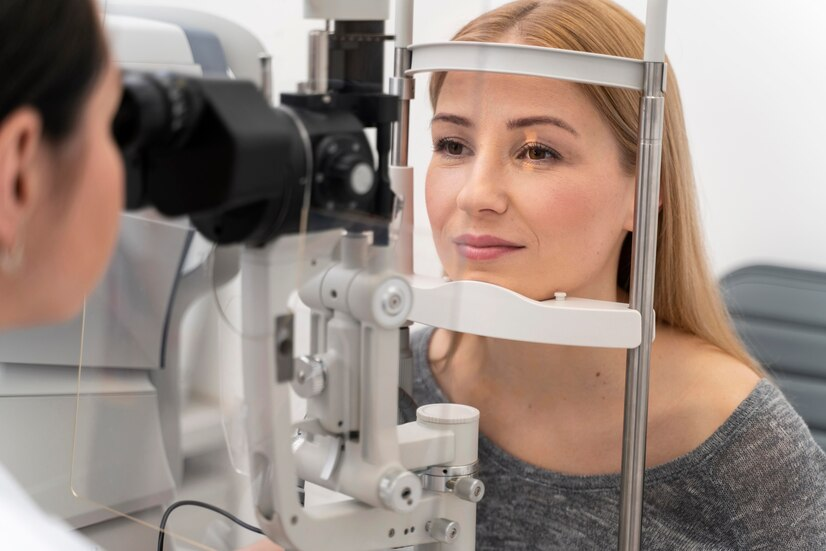
At Smart Vision Hospital, we provide specialized care for retinal detachment, a serious condition where the retina, the light-sensitive layer of the eye, is pulled away from its normal position. The retina plays a crucial role in vision by transmitting visual messages through the optic nerve to the brain. When the retina detaches, it can cause severe vision problems and, if left untreated, can lead to permanent vision loss.
Understanding Retinal Detachment
Retinal detachment occurs when the retina is lifted or pulled from its underlying layer of support tissue. This separation prevents the retina from functioning properly, which can lead to vision loss. In some cases, even a minimal tear in the retina can progress to a full detachment. Prompt diagnosis and treatment are essential to prevent irreversible damage.
Common Symptoms
The symptoms of retinal detachment can vary, but common signs include:
- Sudden appearance of floaters (tiny specks or strings that float into your field of vision)
- Flashes of light in one or both eyes
- Blurred vision
- Gradually reduced peripheral vision
- A curtain-like shadow over your visual field
Our Approach to Care
At Smart Vision Hospital, we understand the urgency and importance of treating retinal detachment. Our dedicated team of specialists is equipped with advanced technology and expertise to provide timely and effective care. We offer personalized treatment plans tailored to each patient’s unique condition and needs.
Advanced Diagnostic Tools
Accurate diagnosis is crucial for effective treatment. Our state-of-the-art facility includes advanced diagnostic tools to assess retinal detachment:
- Optical Coherence Tomography (OCT): Provides detailed cross-sectional images of the retina to identify the extent of detachment.
- Ultrasound Imaging: Used when the retina cannot be clearly seen due to bleeding or other issues.
- Fundus Photography: High-resolution images of the retina to document and monitor the condition.
Treatment Options
The treatment for retinal detachment at Smart Vision Hospital is designed to repair the retina and restore vision. Our treatment options include:
- Laser Photocoagulation: Uses a laser to create tiny burns around the retinal tear, forming scar tissue that seals the retina to the underlying tissue.
- Cryopexy (Freezing Treatment): Uses extreme cold to freeze the area around the retinal tear, helping to secure the retina.
- Pneumatic Retinopexy: Involves injecting a gas bubble into the eye to press the retina against its underlying tissue, followed by laser or cryopexy treatment.
- Scleral Buckling: A surgical procedure that involves placing a silicone band around the eye to push the wall of the eye against the detached retina.
- Vitrectomy: A surgical procedure to remove the vitreous gel and any scar tissue that is pulling on the retina, allowing the retina to reattach properly.
FAQs on Retina Treatment
What are retina problems?
There are several diseases of retina.
- Macular degeneration – a disease that destroys your sharp, central vision.
- Diabetic eye disease.
- Retinal detachment – a medical emergency, when the retina is pulled away from the back of the eye.
- Retinoblastoma – cancer of the retina. It is most common in young children
How do you get a detached retina?
The retina is the light-sensitive layer of tissue that lines the inside of the eye and sends visual messages through the optic nerve to the brain. When the retina detaches, it is lifted or pulled from its normal position
How common is a retina detachment?
A break in the retina can occur from a posterior vitreous detachment, injury to the eye, or inflammation of the eye. Other risk factors include being short sighted previous cataract surgery and diabetic retinopathy. Retinal detachments affect between 0.5 to 1 people per 10,000 per year
What causes a detached retina in the eye?
Vitreous gel, the clear material that fills the eyeball, is attached to the retina in the back of the eye. As we get older, the vitreous may change shape, pulling away from the retina. If the vitreous pulls a small area of the retina with it, it causes a retinal tear. As fluid seeps through the tear, it lifts the retina, causing retinal detachment.
What causes a tear in the retina?
Inflammation (swelling) or nearsightedness (myopia) may cause the vitreous to pull away and result in retinal detachment
What are the symptoms of detached retina?
Symptoms include a sudden or gradual increase in either the number of floaters, which are little “cobwebs” or specks that float about in your field of vision, and/or light flashes in the eye. Another symptom is the appearance of a curtain over the field of vision. A retinal detachment is an ophthalmic emergency
What does it look like when you have a torn retina?
Floaters and flashes in themselves are quite common and do not always mean you have a retinal tear or detachment. However, if they are suddenly more severe and you notice you are losing vision,or have a curtain like loss of vision in any direction you should see your ophthalmologist right away
How long does it take for a detached retina to heal?
Retinal detachment surgery is normally followed by a short recovery at the hospital before returning home. Patients can often return to normal activity one to two weeks after surgery. Travelling should be avoided for some time, and increases in altitude should be avoided until cleared by the surgeon.
What is a retina surgery?
Retinal detachment repair is eye surgery to place a retina back into its normal position. The retina is the light-sensitive tissue in the back of the eye. Detachment means that it has pulled away from the layers of tissue around it. Almost all retinal detachments can be repaired with scleral buckle surgery, pneumatic retinopexy, or vitrectomy. But even with such a high rate of success for surgery, it is important to act quickly. The longer you wait to have surgery, the lower the chances that good vision will be restored.
When does the vision return after a retinal surgery?
Visual improvements should be expected to begin two weeks after surgery, and within six weeks postoperative vision improvement should be complete. The retina may continue to heal for a year or more, and it may take months for vision to stabilize after surgery.





 Dr. Susan Verghese